


Perfectionism in Women: How It Shows Up in Adulthood and How to Manage It

Perfectionism is often praised in our culture. It can look like high standards, strong work ethic, and attention to detail. But beneath the surface, especially for many women, perfectionism can come with anxiety, burnout, and a constant feeling of “never being enough.”
In adulthood and the workplace, perfectionism doesn’t always look like excellence, it often looks like exhaustion.
How Perfectionism Shows Up in Adult Women
Perfectionism in women is often internalized and subtle. Instead of being obvious, it can quietly shape thoughts, behaviors, and emotional experiences.
Some common ways it shows up include:
Overthinking decisions and fearing making the “wrong” choice
Procrastination due to fear of not doing something perfectly
Difficulty relaxing or feeling guilty when not being productive
People-pleasing and saying yes to avoid disappointing others
Harsh self-criticism, even after success
Comparing yourself to others and feeling behind
Many women learn early on to be “good,” responsible, and accommodating. Over time, this can evolve into a belief that their worth is tied to performance and approval.
What Perfectionism Looks Like in the Workplace
In professional settings, perfectionism can be mistaken for dedication or leadership potential—but it often comes at a cost.
You might notice:
Spending excessive time on tasks to make them flawless
Avoiding delegation because “it’s easier to do it myself”
Fear of speaking up unless fully prepared
Difficulty receiving feedback, even when it’s constructive
Burnout from overworking and taking on too much responsibility
Imposter syndrome, despite being highly capable
While these patterns may lead to short-term success, they often lead to long-term stress, decreased confidence, and emotional exhaustion.
The Hidden Impact
Perfectionism is not just about behavior, it affects emotional well-being.
Over time, it can contribute to:
Anxiety and chronic stress
Low self-esteem
Difficulty enjoying accomplishments
Strained relationships
Increased risk of burnout
It creates a cycle: the more you strive for perfection, the more pressure you feel—and the less satisfied you become.
How to Manage Perfectionistic Tendencies
The goal isn’t to lower your standards—it’s to create a healthier, more sustainable way of showing up.
Here are practical ways to begin:
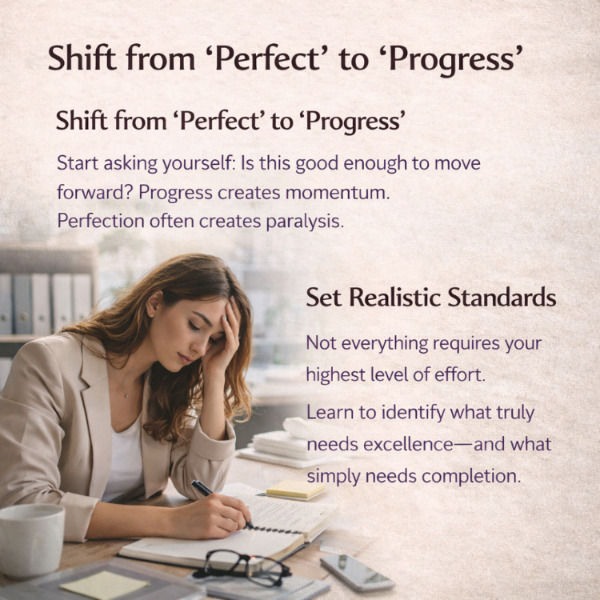
1. Shift from “Perfect” to “Progress”
Start asking yourself: Is this good enough to move forward?Progress creates momentum. Perfection often creates paralysis.
2. Set Realistic Standards
Not everything requires your highest level of effort.Learn to identify what truly needs excellence—and what simply needs completion.
3. Challenge All-or-Nothing Thinking
Replace thoughts like “If it’s not perfect, it’s a failure” with:“I can learn and improve as I go.”
4. Practice Self-Compassion
Speak to yourself the way you would to a colleague or friend.Mistakes are part of growth, not proof of inadequacy.
A Healthier Perspective
Perfectionism often develops as a way to feel safe, accepted, or in control. It’s not a flaw, it’s a learned pattern.
But in adulthood, especially in demanding roles and workplaces, that same pattern can become limiting.
If perfectionism is leaving you feeling overwhelmed, anxious, or burned out, you don’t have to navigate it alone. Our team of therapists is here to support you in building confidence, setting healthy boundaries, and creating a more balanced, fulfilling life.
Reach out today to get started, we’re here to help you move from pressure to peace.


Comments